Storm Prep
Turning my head toward the window, I wondered what I would see if I roused myself from my canopy bed to pull back the curtains. Had the predicted winter storm deposited several inches of snow on the yard overnight as promised? Was the street covered with a thin sheet of ice? Most importantly, if there was an accumulation of frozen precipitation, was it enough to close the schools?
Instead of looking out the window, I shifted my position underneath the floral canopy and turned my head in the opposite direction. Taking a deep breath laden with cautious optimism, I reached out for the remote dangling from a cord on the headboard – a simple on-off switch my indulgent father had rigged up so I wouldn’t have to take two steps to turn on the black-and-white TV attached to the tension pole designed to store record albums.
Click. “The Ralph Emery Show” appeared on the small screen. I was not remotely interested in listening to Emery interview a beloved country music star or hearing a rising artist sing. I was, however, intensely interested in watching the Snowbird Report. When the map of Middle Tennessee appeared on the screen, would my county be covered in falling snowflakes, signifying a much-desired day off from school?
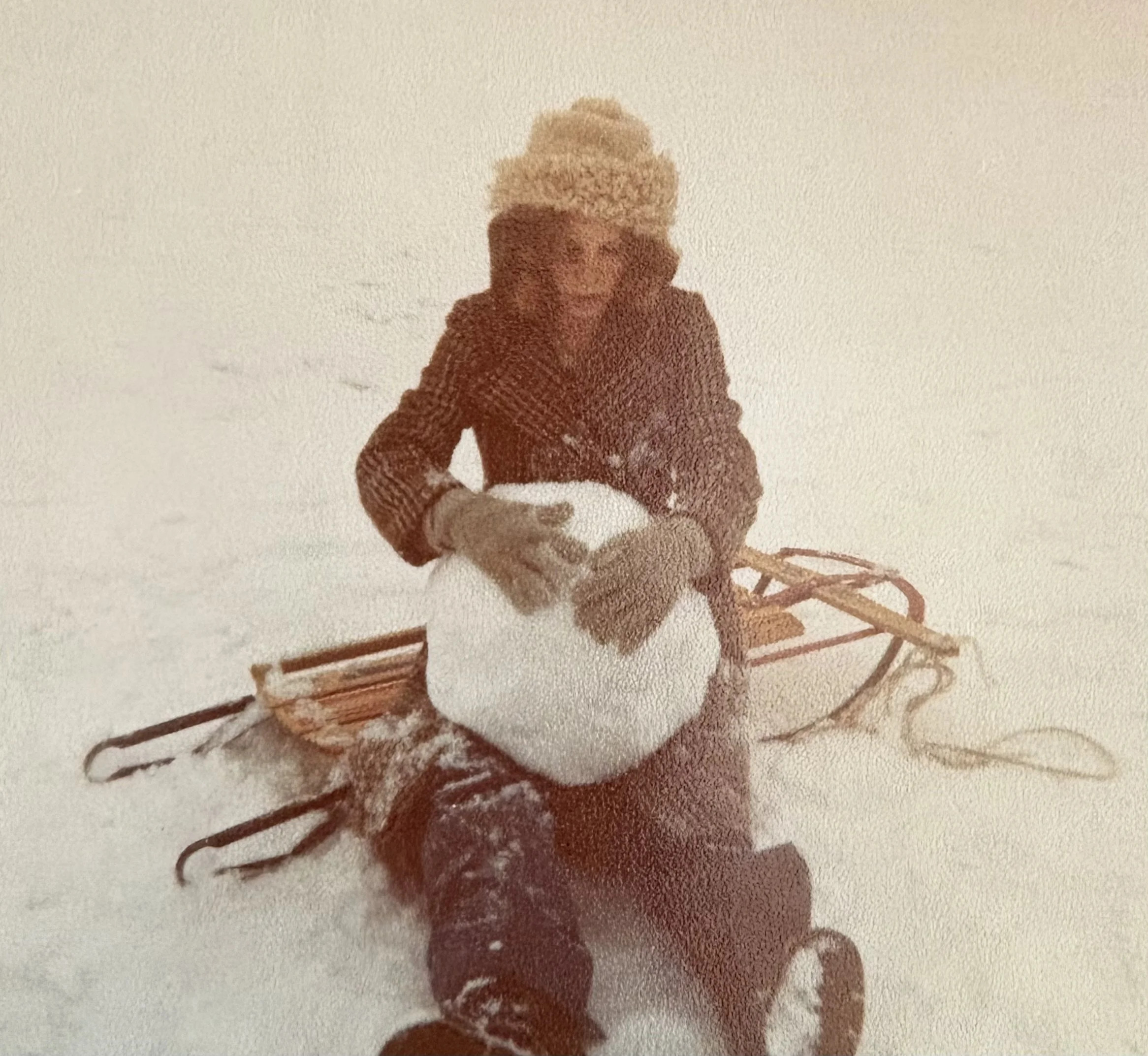
Williamson County snow day, December 1977
Over the past week, as weather reports filled my social media feed due to Winter Storm Fern, I realized how differently I approach storms at this stage of life. Guided by lessons learned during Hurricane Helene, I spent several days preparing for the worst. If we lost power, our well pump would cease functioning, so ensuring we had an ample supply of clean water on hand was a high priority. We positioned 2-gallon bottles of drinking water by the sinks and 5-gallon bottles by the toilets, in addition to filling a tub.
My grocery run was geared toward acquiring food that could easily be heated on a camp stove. While baking toffee chocolate chip cookies and blueberry muffins, I charged my phone, computer, and power brick. After salting our steep driveway, my husband drove his vehicle to the bottom of our little mountain, where he covered the truck with a tarp in case we needed to make an emergency exit from our neighborhood.
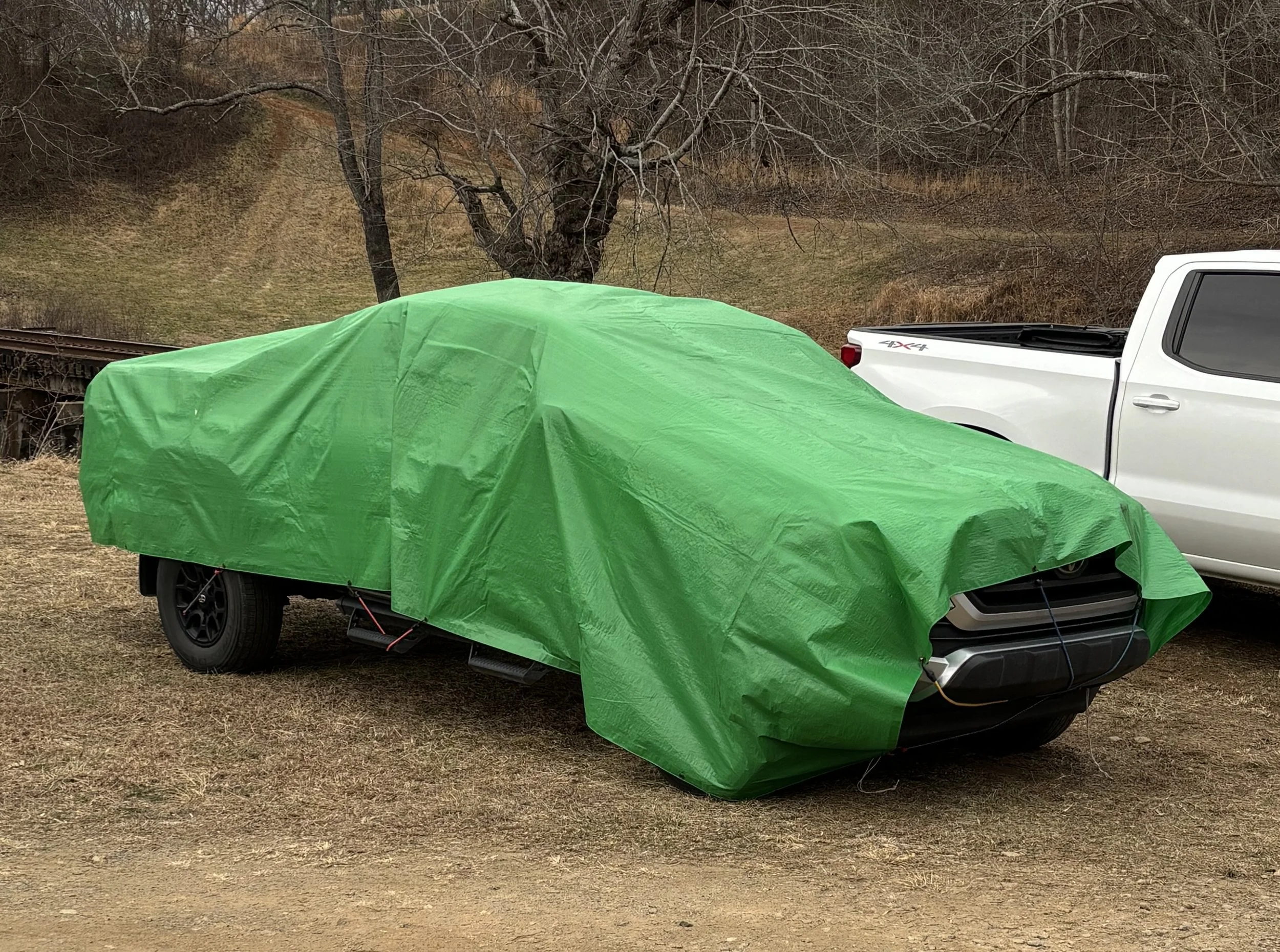
Precautionary parking
As a child, I never worried about winter storms; in fact, I relished them. I did not consider what might happen if the power went out. In fact, I don’t have any memories of the power ever going out during a storm, although surely it did on numerous occasions. I was focused solely on the delights of school-free snow days rather than potential problems or property damage. I was blissfully unaware of any anxiety my parents might have experienced when a storm approached.
Today a thin coating of ice glistens on the tree branches outside my windows. Although the trees are swaying in the frigid wind, no branches have fallen, no trunks have toppled. My grandson is enjoying the first of two snow days this week, closures due not to snowfall but the accumulation of sleet and freezing rain on local roads over the weekend. His house never lost power; neither did ours. All things considered, folks in the Asheville area were extremely fortunate, especially when compared with my friends in Nashville.
Faced with the imperative of making adequate preparations in advance of the storm last week, I found my mind drifting to Jesus’ parable of the ten bridesmaids. This is the first of three parables recorded in Matthew 25; the final one focuses on words that remain timely: “‘Truly I tell you, whatever you did for one of the least of these brothers and sisters of mine, you did for me.”
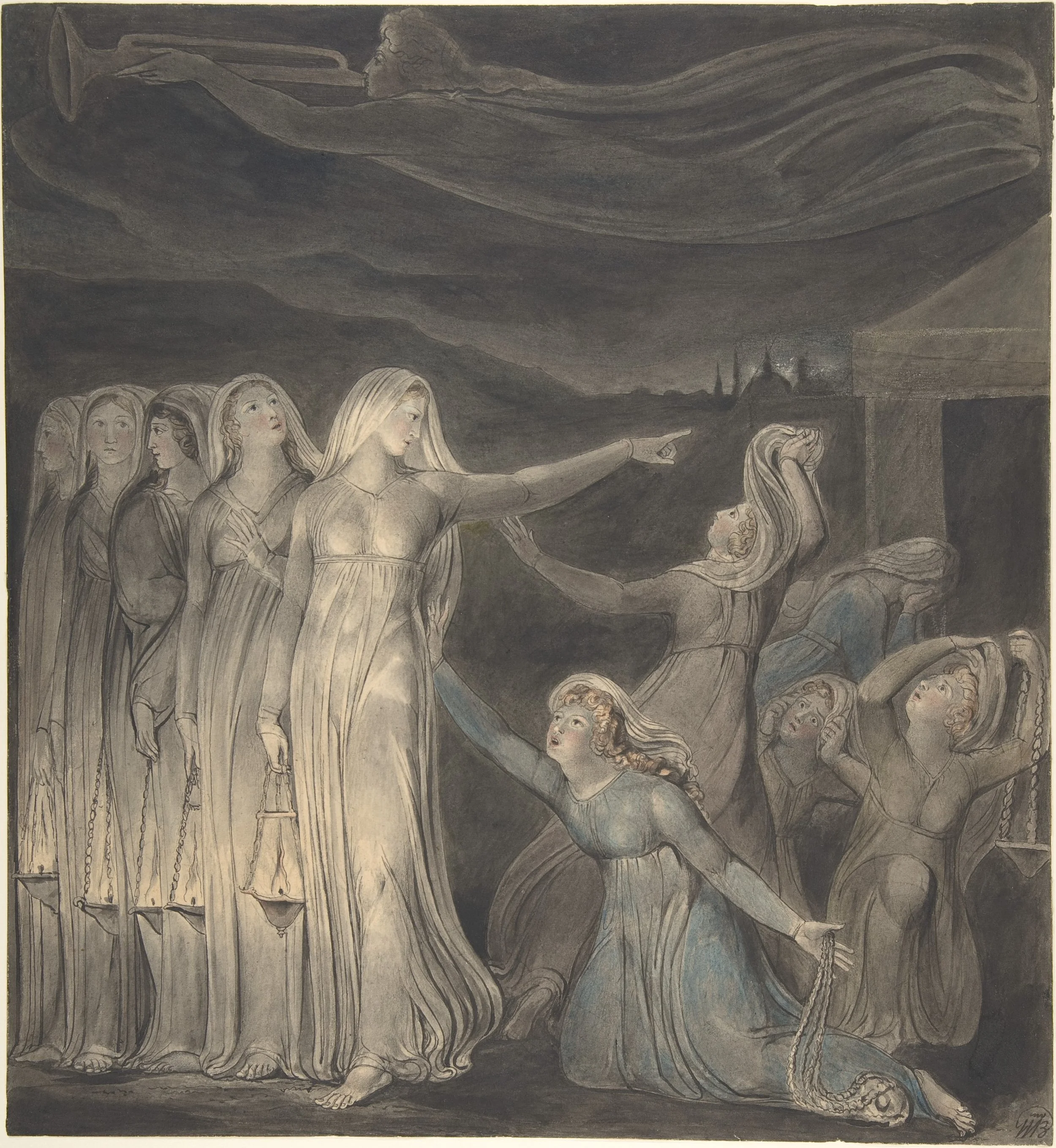
“The Parable of the Wise and Foolish Virgins” by William Blake
The parable of the ten bridesmaids is all about preparedness. The ten women set off to meet the bridegroom with lamps in hand. Each woman’s lamp was filled with oil, and five of the women carried flasks with extra fuel. When the bridegroom’s arrival was delayed, wicks burned down and the women fell asleep.
When awakened by shouts at midnight that the bridegroom was finally coming, five of the women realized their resources had been depleted. When these five “foolish” women begged their five “wise” friends for help, their requests were flatly denied. In the end, their failure to anticipate an unforeseen event left them locked out of the party.
Many years ago at the Festival of Homiletics, I heard Dr. Anna Carter Florence deliver a compelling sermon on this text. In “Filling Stations,” Florence challenged the assembly of preachers to take stock of their own spiritual resources. Noting that there are some things we can’t borrow from other people, she urged us to build up our own reserves by identifying the things that fill us up spiritually. I have taken her words to heart, and I strive to help others do the same through my work as a spiritual director.
But this preparation parable has bothered me in recent days. I admit I have not held the five “wise” bridesmaids in high esteem. My heart is with the five “foolish” bridesmaids, whose preparations would have been sufficient, had the bridegroom not tarried. Have you ever believed you were well-prepared, only to unexpectedly encounter a situation where your resources - physical or emotional or spiritual - proved to be inadequate? How devastating it would be to ask for help and be rebuffed! Aren’t we called to be wise AND compassionate?
As I read the horrific stories coming out of Minneapolis while I prepared for Winter Storm Fern, I wondered if anyone truly felt prepared for the chaos the federal government has inflicted on this city. But I have felt reassured as I have watched a grieving community rally to support their neighbors, bearing witness to injustice. I have admired the courage of clergy who traveled from across the country to protest in subzero temperatures; over 100 clergy were arrested for their demonstration of solidarity. I have been inspired by stories of folks delivering groceries to immigrant families who are afraid to leave their homes. This is what it looks like to stand with and serve the least of these.
As I have contemplated Jesus’ problematic parable in light of current events, I have come to several conclusions. Storms will come, meteorologically and otherwise. I will prepare as best as I can, realizing that I can’t predict every possible outcome. I will intentionally tend to my soul. I will ask for help when I need it, physically or otherwise. And when I see a neighbor in need, I won’t hoard my oil.