The Velveteen Rabbit
Last Sunday morning, thirty adults gathered in a Bible study classroom clutching copies of the classic children’s story The Velveteen Rabbit. Since my husband and I joined this group three years ago, our class has read 14 books together, typically discussing one chapter per week. But last Sunday marked the first time we focused our attention on a book written for children.
This timeless story penned by British writer Margery Williams was first published in 1921 in Harper’s Bazaar and released in book form the following year. Most of us were able to pluck a copy off our own bookshelves. The paperback I found among my collection of children’s books dates to my childhood; the construction paper pocket taped inside the back cover, holding a handwritten checkout slip, is an indication that my mother kept this book in her 5th grade classroom.
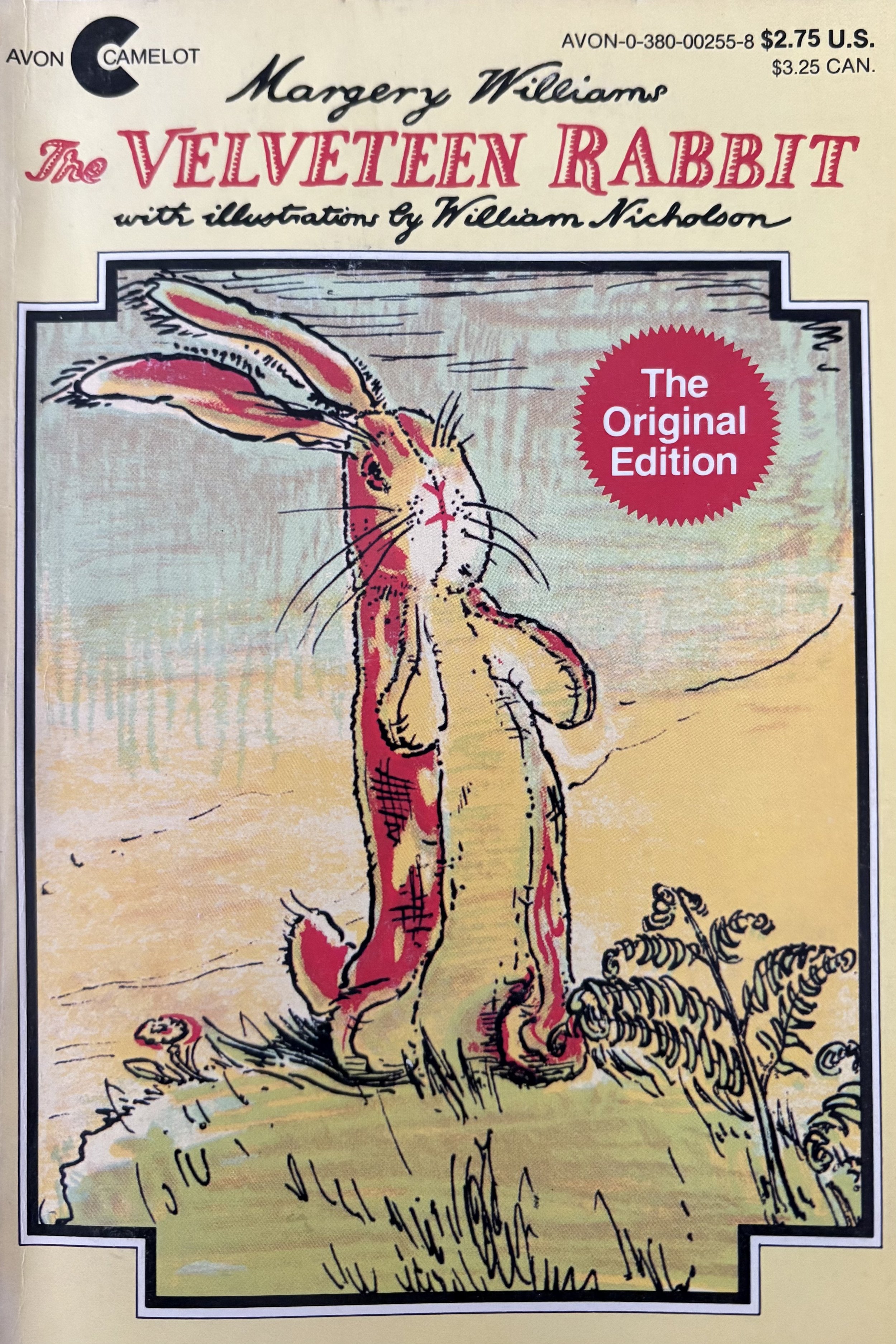
Our class discussion was facilitated by our resident novelist, Terry Roberts. Terry’s choice of The Velveteen Rabbit was intended to be the first in a series of opportunities for us to use narrative to illuminate elements of the spiritual journey. In advance of our Sunday gathering, he prompted us to be prepared to respond to this question: What is the most evocative sentence in this text? That’s the kind of homework I can enthusiastically embrace.
Decades had passed since the last time I read this story, and aside from an awareness that the book focused on what it means to be real, I had forgotten the storyline. The Velveteen Rabbit is a Christmas gift to the Boy, a gift initially embraced, then neglected, then rediscovered in the toy cupboard in a moment of bedtime crisis. While the sawdust-stuffed animal resides in the toy cupboard, he learns about nursery magic from the Skin Horse, who explains that when a child loves you for a long time, you become Real. But even the wise,4 old Skin Horse’s understanding was limited by his own experience; he did not know that another level of Realness existed beyond the child/toy relationship. At the end of the story, the Velveteen Rabbit is transformed by the Nursery Magic Fairy into a Real Rabbit.
One by one, we went around the circle so each class member could read aloud the sentence(s) they deemed to be most evocative. One passage was cited by multiple members – an unsurprising choice based on our demographics. As the Skin Horse explains to the Velveteen Rabbit how becoming Real is a process, he sagely observes: “Generally, by the time you are Real, most of your hair has been loved off, and your eyes drop out and you get loose in the joints and very shabby.”
The sentence I selected was short: “The Boy himself had said it.” Nana, who ruled the nursery, had been forced to search the yard by candlelight to retrieve the Bunny because the Boy could not sleep without him. When Nana referred to the Bunny as a mere toy, the Boy indignantly retorted, “He’s REAL!” Thus, the Rabbit silently rejoiced because he had finally experienced nursery magic. “He was Real. The Boy himself had said it.”
When I read those lines, I immediately thought about the importance of naming in Scripture, for names can convey identity and calling. I also recalled how Jesus used his words to help people recognize their identity as God’s beloved children and embrace their calling to become messengers of God’s Good News.
Reflecting on my chosen sentence, I suddenly recalled a conversation that shifted how I viewed my identity and calling. Eighteen years ago, on a retreat for women in ministry sponsored by the Cooperative Baptist Fellowship, I sat in a small circle in the grass with a group of strangers. As I described my experience with imposter syndrome - at that point I lacked an official ministerial title and had not been ordained - a woman in the group said in a tone that was simultaneously gentle and forceful, “You have been called by God. You have been ordained by God.” The woman herself had said it, and her words sounded to me like a direct message from God. I was a Real minister, even without a job title, office, or certificate of ordination.
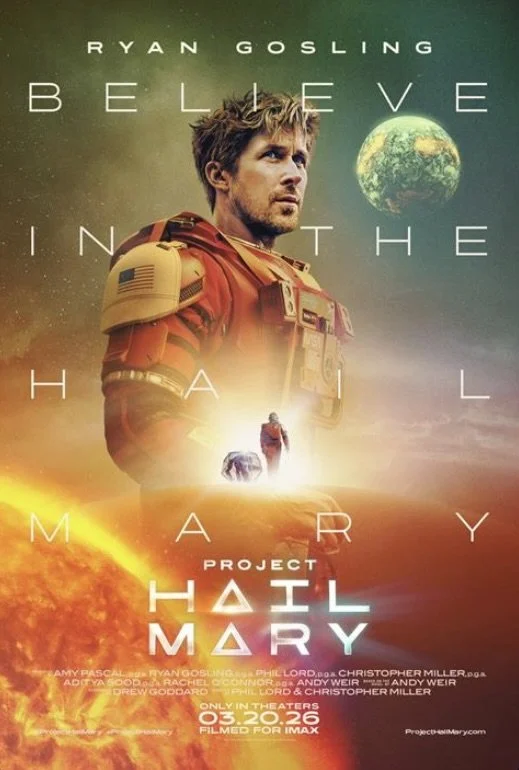
I have long believed that the Bible is not the only book God speaks through. Stories are potent, whether they are found among the pages of a leather-bound Bible or a tattered paperback copy of a children’s book. Last night as I sat in a movie theater watching “Project Hail Mary,” I could not help but note the intersection between the story being told on the screen and the Holy Week narratives. A man named Grace is called to sacrifice his life on a mission to save the Earth. Sound familiar?
What stories has God used lately to help you reflect on your spiritual journey? What do you think it means to be Real?
NOTE: If you would like to learn about the history of The Velveteen Rabbit, check out this story from NPR marking the book’s 100th birthday.