BLUE CHRISTMAS
As I prepared to help lead a congregation through the season of Advent in 2009, three weeks into my tenure as associate pastor, I struggled to find my footing. The emotional weight of the past few months tempered my joy.
Photo by KaLisa Veer on Unsplash
My mother died the week before I was scheduled to begin my ministry with this congregation. My only child was nearing the end of his first semester of college – hello, empty nest. For the first time in fifteen years, I would not be celebrating Christmas in the church where my husband and I had put down roots while we raised our son. So many changes. So much grief.
The organization that provided hospice care for my mother during her last month of life sent out an invitation to bereaved families inviting them to participate in a Blue Christmas service. I was unfamiliar with such a program but immediately knew I would benefit from the experience.
On the first Thursday of Advent, I walked into a dimly lit room at the hospice facility. The focal point of the space was a long table covered with sand. A large, white candle burned at the center of the table. I took my seat as a counselor stepped up to the microphone. She welcomed us compassionately, acknowledging the grief that blanketed every guest in the room.
Each person received a handout titled “The Griever’s Holiday Bill of Rights” – a document I still have today. The counselor slowly walked us through the list, which included statements like “You have the right to DO THINGS DIFFERENTLY” and “You have a right to CHANGE DIRECTION IN MID-STREAM.” I felt something shift internally as she gave me permission to be gentle with myself. I could develop strategies to navigate this season heavy-laden with grief.
After the educational portion of the program, another counselor explained the ritual the staff had prepared for us. Anyone who desired to participate was invited to pick up a small, white candle from a basket, step to the microphone and speak aloud the name of the person they were remembering, light their candle from the burning wick of the pillar candle, and place their candle in the sand. The counselor reassured us that no one was required to speak – you could bypass the microphone and move directly to the table.
Then the counselor spoke the words that brought tears to my eyes: “After you have lit your candle, you are welcome to leave. You may also choose to remain in this space to watch your candle burn for as long as you like. Know that we – the staff – will remain in this room until every one of your candles has burned out.” I was astonished by this simple gift of presence, this offer to hold space. The counselors would bear witness to our grief until the very end. I walked out of that place on a cold December evening feeling seen and held.
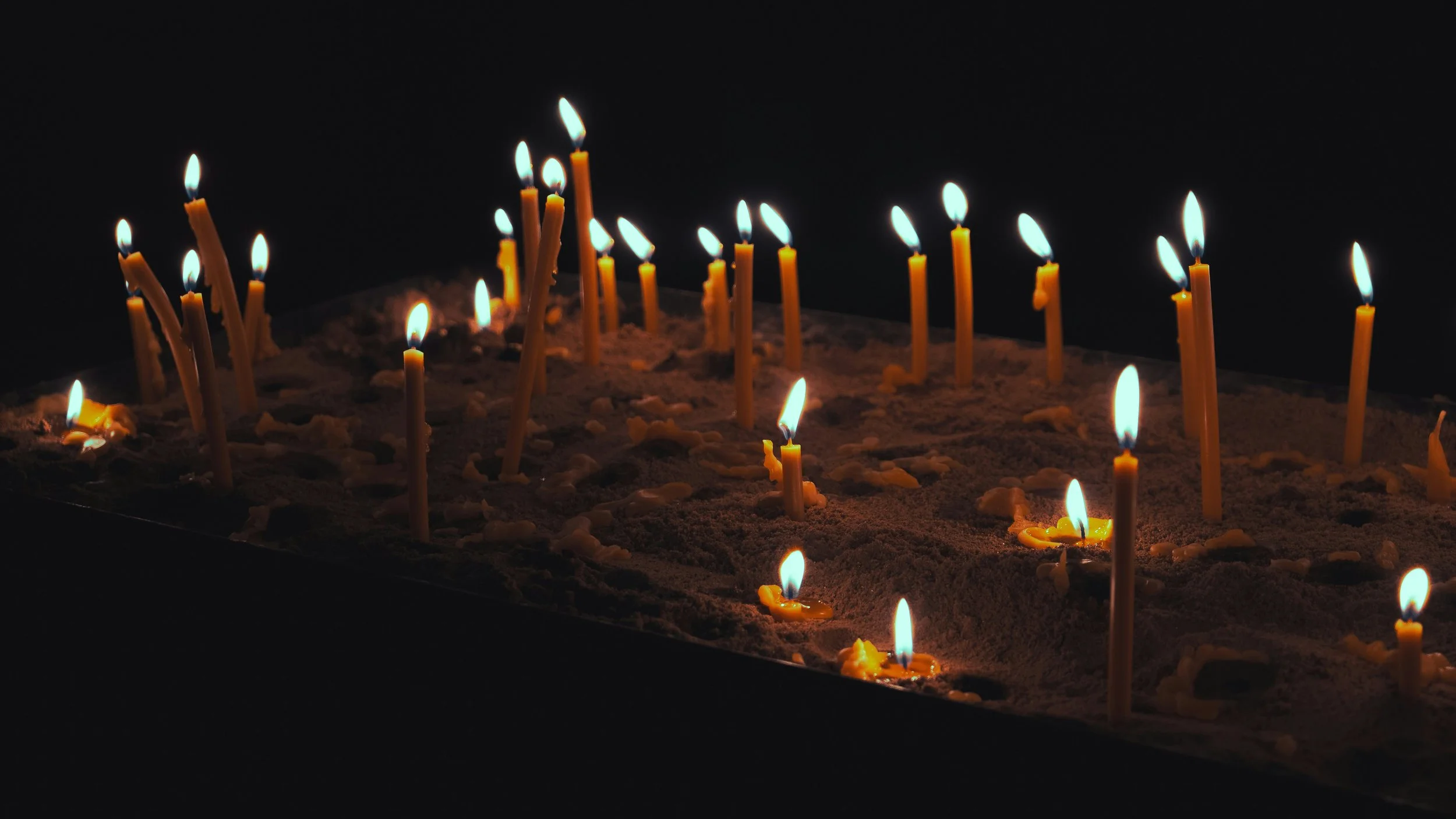
Photo by Denis Bayer on Unsplash
During my cycling class at the Y this week, the instructor emphasized the importance of intervals of active recovery. In our workouts, these intervals between hill climbing and sprinting usually last for three minutes, giving participants a chance to regulate their breathing and slow their heart rates. The trainer explained, “Active recovery is important because it allows you to integrate what has happened while you prepare for what is next.”
What a fitting metaphor for the season of Advent! I suspect few of us showed up at church on the first Sunday of Advent feeling well-rested, relaxed, and peaceful. Most of us began the new Church year bearing long “To Do” lists and litanies of laments. December has only just begun, but we sense we are already behind. Emotionally, many folks enter the season of Advent feeling like they are running on empty, worried about so many things, so many people.
What if Advent is a divine invitation to practice active recovery? What if we view this holy season as a chance to integrate what has been in happening in our lives over the past year while we prepare for what comes next? We can prepare our hearts not only to welcome Jesus into the world again but also to face the challenges that are sure to come in the days ahead.
Practicing active recovery means intentionally slowing down. Practicing active recovery means carving out space for prayer and reflection. Practicing active recovery means engaging in spiritual practices that help your body, mind, and spirit rest in the embrace of the Holy One who calls to us in the midst of darkness, who comforts us as we grieve.
The Spirit of God beckons you to rest and reflect during this season of Advent. Will you accept this holy invitation?