The Octopus Tree
At the beginning of March, my husband, son, grandson, and I spent two nights camping at Huntington Beach State Park on the South Carolina coast. Friends who were aware of our affinity for camping and my devotion to birding had encouraged us to visit this special place. Huntington Beach did not disappoint.
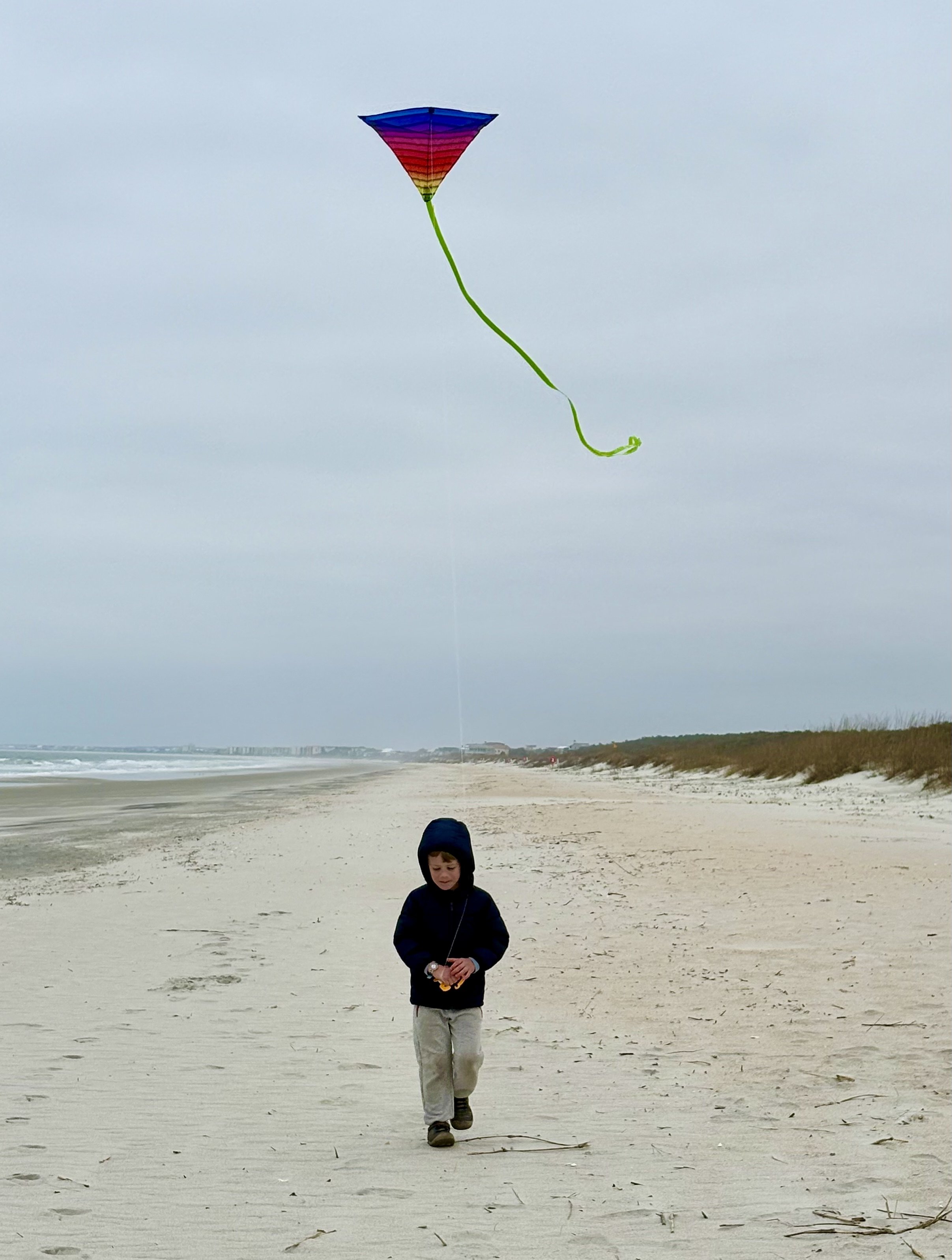
Beach boy and his first kite
During our visit, my grandson acquired his first kite, which he flew as we made the long walk up the beach to the jetty. After observing the scurrying sanderlings, diving laughing gulls, and gliding red-throated loons from the jetty, my son and I headed for the Sandpiper Pond Nature Trail to continue our birding adventure.
As we meandered through the maritime forest, we suddenly came upon a startling sight: branches jutting out of the sandy soil at odd angles. What strange trees these are, I thought. Then I read the interpretive sign. This was a single live oak - the Octopus Tree.
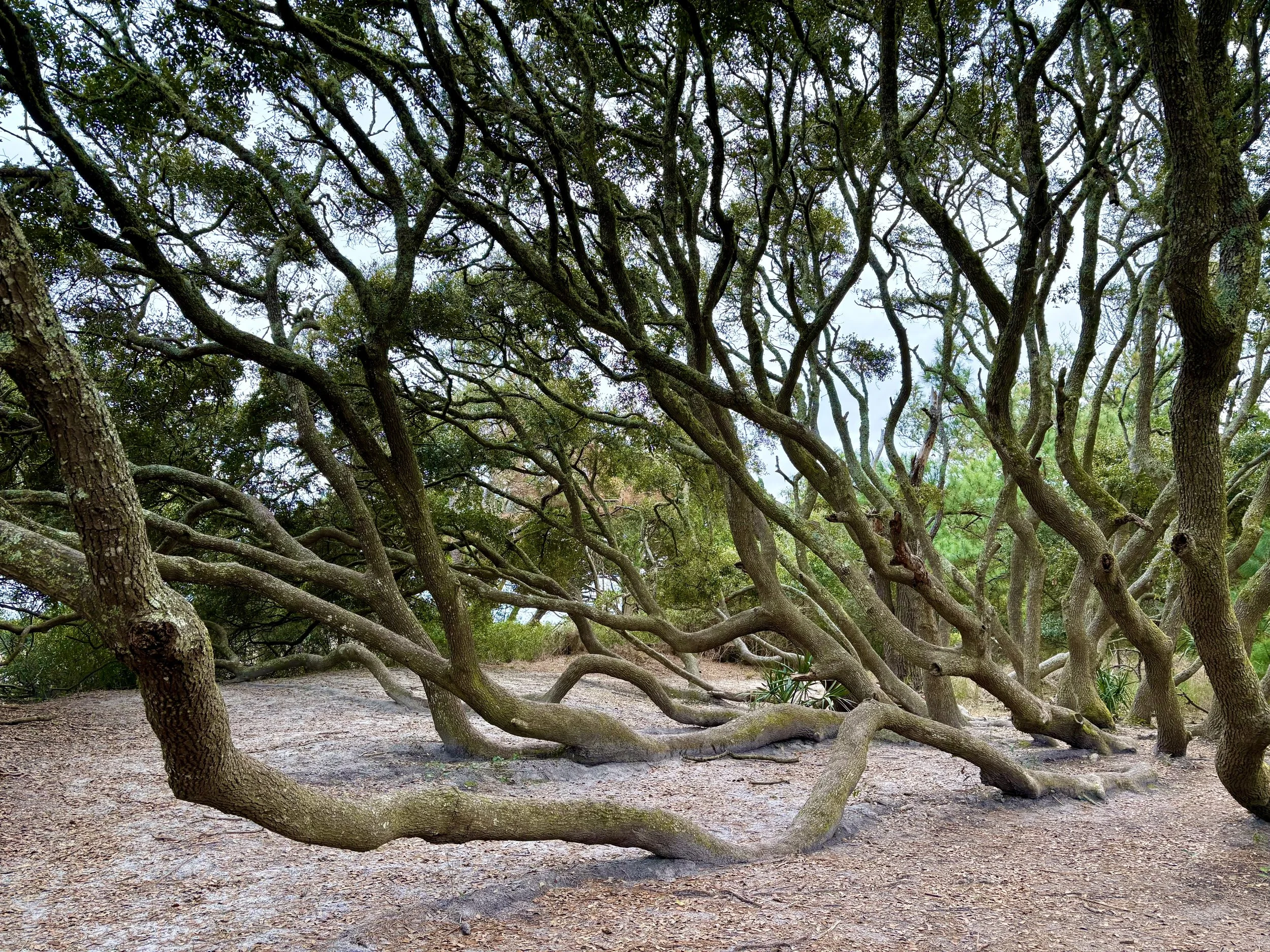
The Octopus Tree at Huntington Beach State Park
When this live oak was toppled by hurricane force winds, some of the tree’s roots remained anchored in the ground. Over time, new limbs began to sprout from the now horizontal trunk. Slowly blanketed by shifting soil, the trunk eventually disappeared from view. But the sprawling “tentacles” still stretched skyward from the hidden trunk, allowing the tree to thrive, despite the fierce coastal weather.
This spectacle reminded me of the massive nurse logs I had seen on the opposite side of the continent in the coastal forests of the Pacific Northwest. A nurse log is different from the Octopus Tree, because the tree itself is no longer growing; no roots remain grounded in the soil. Instead, as these massive fallen trees decompose, they become nurseries for new growth. Moss and mushrooms take root in cavities. Ferns flourish. Conifer seedlings sprout.
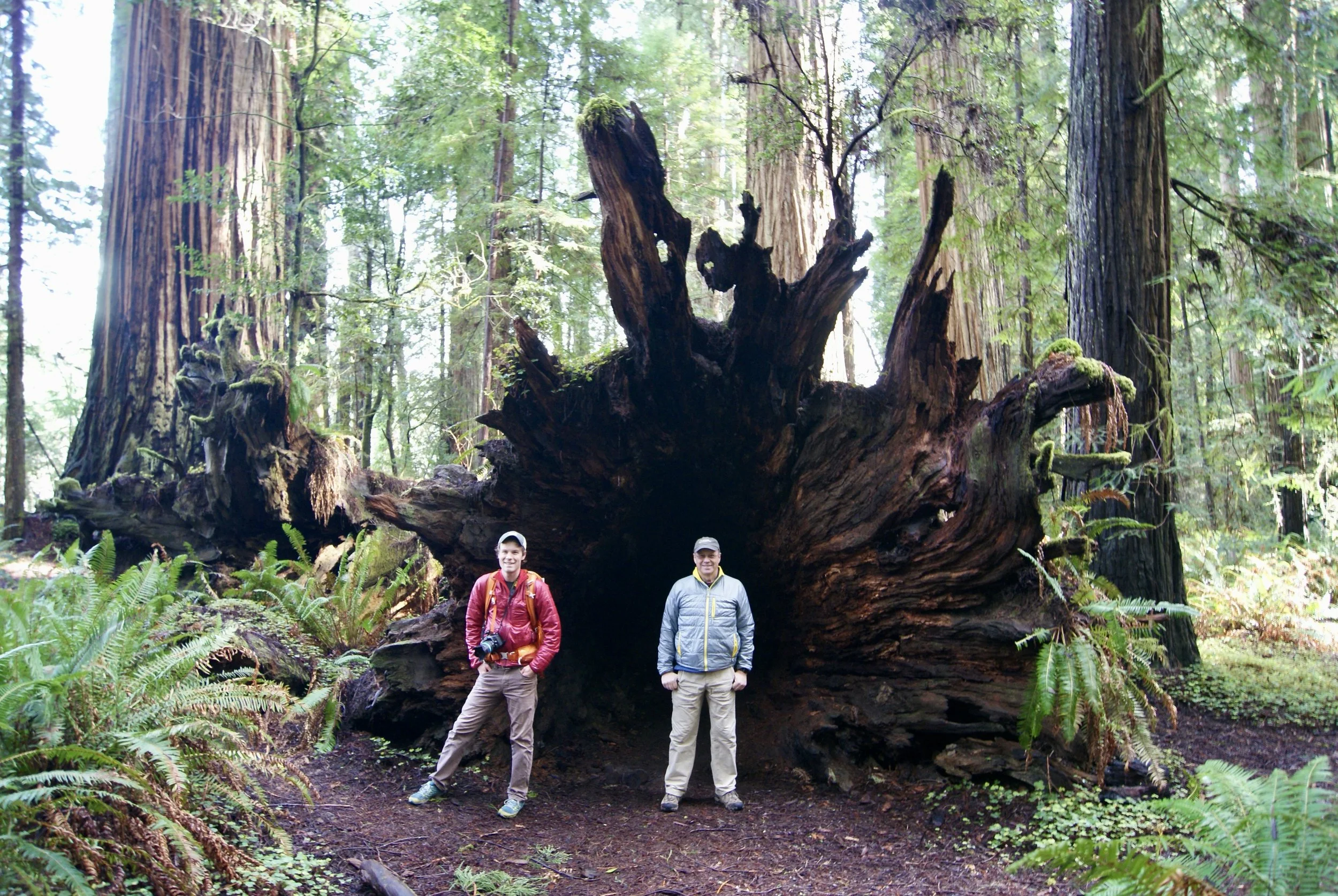
Stout Memorial Grove, Jedidiah Smith Redwoods State Park, Northern California
Both images are potent. A dead tree becomes fertile ground for new life. A fallen tree finds a way to survive.
As I surveyed the Octopus Tree’s twisting branches on that March afternoon, I could not help but think about friends who have endured particularly stormy seasons of life. Buffeted by winds and waves that could have wiped them out, they nevertheless remained rooted and grounded. Knocked down but still stretching toward the Light, they were able not only to survive but also to thrive.
This tree’s for you, dear ones.
“I pray that, according to the riches of God’s glory, God may grant that you may be strengthened in your inner being with power through God’s Spirit and that Christ may dwell in your hearts through faith, as you are being rooted and grounded in love.” (Ephesians 3:16-17)